
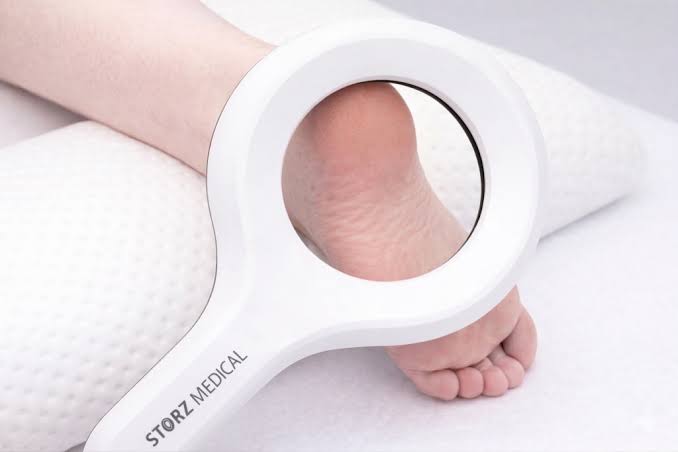
As our understanding of musculoskeletal medicine continues to evolve, so too do the treatments available to help patients recover from painful conditions without surgery.
One of the most exciting recent developments is Extracorporeal Magnetotransduction Therapy (EMTT)—a completely non-invasive treatment that uses high-energy magnetic fields to stimulate the body’s natural healing processes. Unlike treatments that simply aim to mask pain, EMTT is designed to influence the biological activity of bone and soft tissues, making it an exciting addition to regenerative musculoskeletal medicine.
At Cheltenham Podiatry, EMTT is used as part of a comprehensive treatment programme for selected patients with arthritis, bone marrow oedema, stress fractures, delayed bone healing and chronic musculoskeletal pain.
What is EMTT?
Extracorporeal Magnetotransduction Therapy (EMTT) delivers high-energy electromagnetic pulses deep into musculoskeletal tissues. These magnetic fields penetrate bone, cartilage, tendons and ligaments without causing discomfort or tissue damage.
Research suggests EMTT may:
- Stimulate cellular metabolism
- Enhance mitochondrial activity and cellular energy production
- Promote osteoblast (bone-forming cell) activity
- Encourage tissue repair and regeneration
- Reduce inflammatory signalling
- Improve the biological environment for healing
Treatment is painless, requires no injections or anaesthetic, and patients can immediately return to their normal daily activities.
EMTT for Midfoot Arthritis
Midfoot osteoarthritis is one of the most common causes of chronic foot pain. Patients frequently experience pain while walking, difficulty standing for prolonged periods and stiffness that limits everyday activities.
Traditional treatment often focuses on symptom management through footwear modifications, orthotics, anti-inflammatory medication or corticosteroid injections. While these treatments can provide relief, they do not directly address the biological changes occurring within the joint.
A recent 2026 prospective pilot study investigated EMTT in patients with moderate to severe midfoot osteoarthritis. Participants received eight EMTT treatments over four weeks and were followed for six months.
The study demonstrated:
- Significant improvements in foot function
- Reduced pain scores
- Improved walking ability
- No treatment-related adverse events
Although this was a small pilot study, it provides encouraging early evidence that EMTT may become an important non-surgical treatment option for carefully selected patients with midfoot arthritis. Larger randomised studies are now underway to confirm these findings.
Arthritis Involves More Than Cartilage
For many years, osteoarthritis was considered primarily a disease of cartilage wear.
We now know that arthritis affects the entire joint, including:
- Cartilage
- Subchondral bone
- Bone marrow
- Synovium
- Ligaments
- Tendons
- Muscles
MRI studies frequently demonstrate bone marrow oedema and subchondral bone cysts in patients with moderate to severe arthritis. These changes are strongly associated with pain and reduced function and are increasingly recognised as important drivers of osteoarthritis progression.
Rather than focusing solely on cartilage, EMTT aims to improve the biological health of the underlying bone as well as the surrounding soft tissues.
EMTT for Bone Marrow Oedema
Bone marrow oedema is often described as a “bone bruise”, but it actually represents inflammation and increased fluid within the bone itself.
It is commonly seen in:
- Osteoarthritis
- Stress fractures
- Bone bruises
- Overuse injuries
- Osteochondral lesions
- Chronic plantar fasciitis with calcaneal bone oedema
Because EMTT stimulates bone metabolism and cellular repair mechanisms, it has become an increasingly attractive treatment option for painful bone marrow oedema.
Reducing bone marrow oedema may improve pain, function and weight-bearing capacity while supporting the body’s normal healing response.
EMTT and Bone Healing
One of the most exciting areas of EMTT research is its potential role in accelerating bone healing.
Bone healing requires a carefully coordinated series of biological events involving inflammation, blood vessel formation, stem cell recruitment, collagen production and new bone formation.
Laboratory research has demonstrated that EMTT stimulates osteoblast activity by increasing the expression of important bone-forming genes including:
- RUNX2
- SP7 (Osterix)
- COL1A1
- ALPL
- Osteocalcin (BGLAP)
These changes result in greater collagen production, accelerated matrix mineralisation and enhanced calcium deposition—all essential components of healthy bone repair.
Importantly, these cellular changes occur without negatively affecting cell viability, suggesting EMTT promotes bone formation while maintaining normal cellular function.
EMTT for Stress Fractures and Delayed Bone Healing
Clinical interest in EMTT continues to expand beyond arthritis.
Current research suggests EMTT may benefit patients with:
- Stress fractures
- Delayed union fractures
- Non-union fractures
- Bone healing following surgery
- Chronic bone stress injuries
A 2026 scoping review examining the available evidence found that EMTT consistently demonstrated biological effects that promote bone regeneration. Clinical reports described faster fracture healing, pain reduction and improved functional recovery, particularly when EMTT was combined with Extracorporeal Shockwave Therapy (ESWT).
Although much of the clinical evidence is currently limited to pilot studies and case reports, the biological data supporting EMTT continues to grow, making it an exciting area of regenerative medicine.
Combining EMTT with Regenerative Medicine
At Cheltenham Podiatry, EMTT is often incorporated into a comprehensive regenerative treatment programme.
Depending on the diagnosis, treatment may include:
- Ultrasound-guided Platelet Rich Plasma (PRP)
- Photobiomodulation (Low-Level Laser Therapy)
- Individualised rehabilitation programmes
- Footwear advice
- Custom orthotic therapy where appropriate
These therapies work together to reduce pain while supporting tissue repair and recovery.
Is EMTT Right for You?
EMTT may be appropriate for patients experiencing:
- Midfoot arthritis
- Foot and ankle osteoarthritis
- Bone marrow oedema
- Stress fractures
- Delayed fracture healing
- Chronic tendon injuries
- Persistent musculoskeletal pain
A detailed clinical assessment, together with imaging such as X-rays, ultrasound or MRI, helps determine whether EMTT is likely to benefit your particular condition.
While EMTT is not a cure for arthritis, the growing body of evidence suggests it may provide a valuable non-invasive option to improve pain, function and support the body’s natural healing processes.
As research continues to expand, EMTT is becoming an increasingly important component of modern regenerative musculoskeletal medicine.
References
Charles R, Vlasak A, Bondi E. Extracorporeal Magnetotransduction Therapy (EMTT) for Midfoot Osteoarthritis: A Prospective Pilot Study of Pain and Functional Outcomes. Journal of the American Podiatric Medical Association. 2026.
Charles R, Vlasak A, Turner T, Romero J, Bondi E. Extracorporeal Magnetotransduction Therapy as an Adjunctive and Primary Modality for Bone Healing: A Scoping Review of Current Evidence. Electromagnetic Biology and Medicine. 2026.
Hollander K, Burgkart R, von Eisenhart-Rothe R, Vester J, Gerdesmeyer L. Extracorporeal Magnetotransduction Therapy for Management of Musculoskeletal Disorders: A Double-Blind, Placebo-Controlled, Randomised Trial. Journal of Back and Musculoskeletal Rehabilitation. 2026.
Gerdesmeyer L, Tübel J, Obermeier A, et al. Extracorporeal Magnetotransduction Therapy as a New Form of Electromagnetic Wave Therapy: From Gene Upregulation to Accelerated Matrix Mineralization in Bone Healing.Biomedicines. 2024.
Hunter DJ, Bierma-Zeinstra SMA. Osteoarthritis. The Lancet. 2019;393(10182):1745–1759.
Grässel S, Muschter D. Recent advances in the treatment of osteoarthritis. F1000Research. 2020;9 Faculty Rev-325.
Latest News
EMTT: A New Approach to Treating Arthritis, Bone Marrow Oedema and Bone Healing
bone oedema due to chronic plantar fasciitis
Treatment for peripheral Neuropathy with B12 Injections
Peripheral Neuropathy is changes to the sensory nerves and in[…]